I recently went to NeurIPS, the world’s largest academic AI conference. This was a multi-purpose trip: present a poster at the MechInterp Workshop and hobnob with other AI Safety researchers; get a general impression of state of the art in AI, particularly the gamedev/creative space, and represent Timaeus, the company I’ve recently joined.
Table of Contents
General Observations
This was really an incredible trip for me – I’ve never done an in-person academic conference before, let alone one with 29,000 attendees. You feel like everyone in the world is there and you are right in the center of things. Which isn’t really true – you are not seeing the commercial side of AI, and in any case most of the research is half a year out of date due to the mechanics of publishing. It’s a great feeling, anyway.
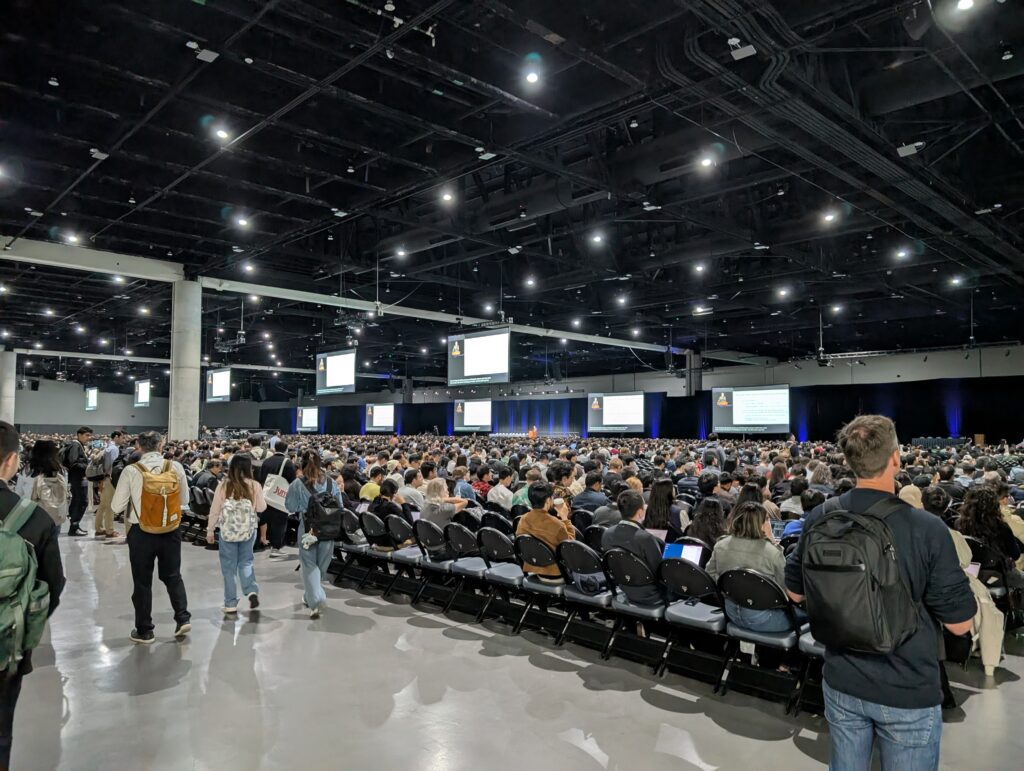
It’s quite a brutal trip. The long trip (~16 hours) and jetlag put me on the back foot. I caught two separate illnesses while at the conference, and suffered through the conference’s minimal catering. Then you meet some of the smartest people in the world, who expect you have an opinion on new research that, if you are lucky, you skimmed on the flight over. I’m sure I didn’t present my best.
I read several help guides before going, as I had little idea what to expect. I think my biggest mistake was not doing any advance planning and just turning up to see what will happen.
- Many of the socials were fully booked. Socials are a huge chance to serendipitously meet people who are usually quite busy, so it’s a good idea to find the right ones. Though a lot is organized on the fly, so I didn’t do too badly.
- There’s several other “workshops” that occur around the conference without being an official part of it. These are often more valuable as they are more niche and targetted.
- Schedule 1:1s.
Basically, my point is that the conference is huge and mostly filled with irrelevant crap. You need to have some idea what / who you are looking for.
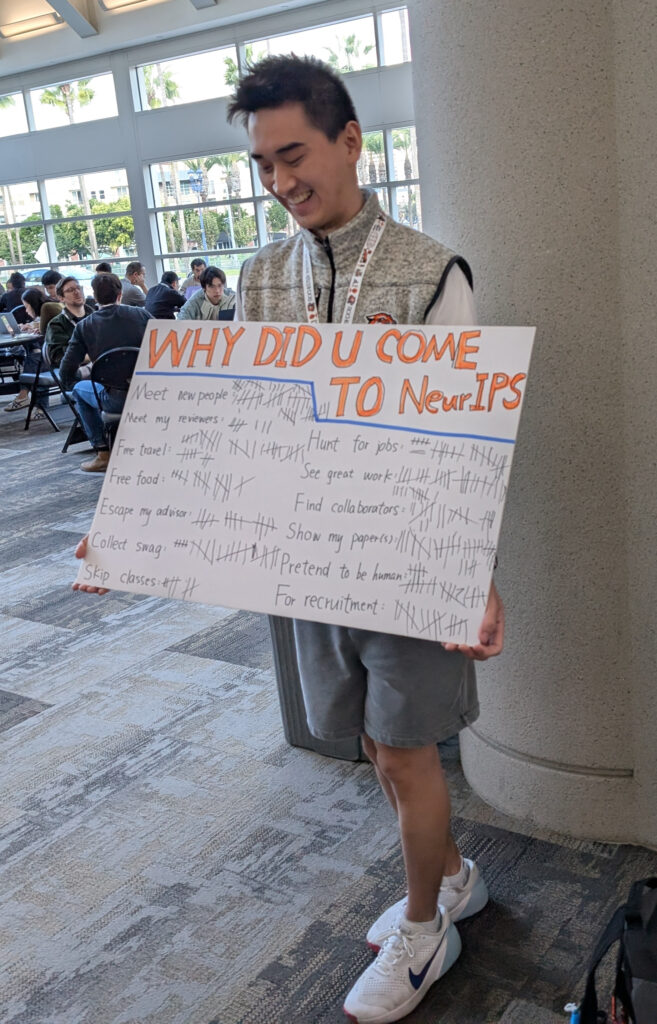
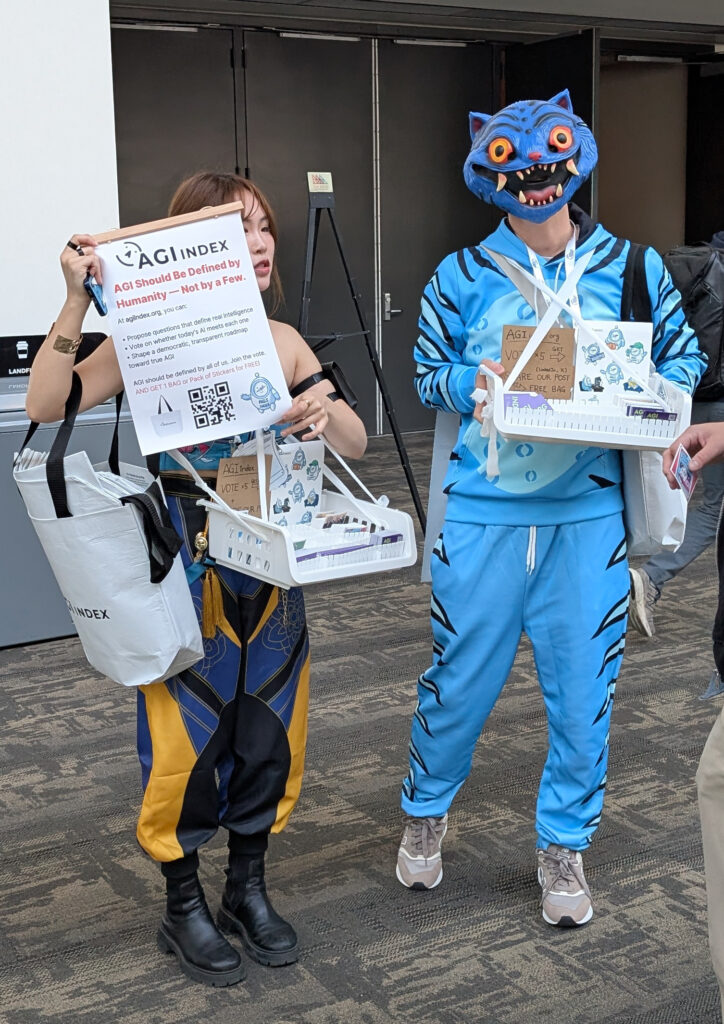
My other surprise was how much of a focus on recruitment there is. The exhibition hall is extremely naked about this, with stalls enticing hopefuls with puzzles, snacks, free coffee, robots, free coffee *and* robots, and sometimes invites to sponsored socials. About half the companies there were finance companies, with the rest being science ventures, frontier labs and growing startups. Two of my ex-employers were represented. The physical jobs board in the corridor was also constantly crowded. I guess I’m not surprised to see it – most researchers are going to do a handful of work during a PhD then get a lucrative position.
What’s happening at NeurIPS?
Disclaimer: This is basically impossible to report accurately. Take this as a stochastic sample from a larger distribution.
GameDev at NeurIPS
I’ve had a long time interest in game development, and how it relates to AI. There’s not really a huge focus on games at NeurIPS, mostly NeRF and animation. There’s also a lot of image generation and vision with a looser connection. But generally the big studios are pretty tight lipped about their technology, so it’s hard to say.
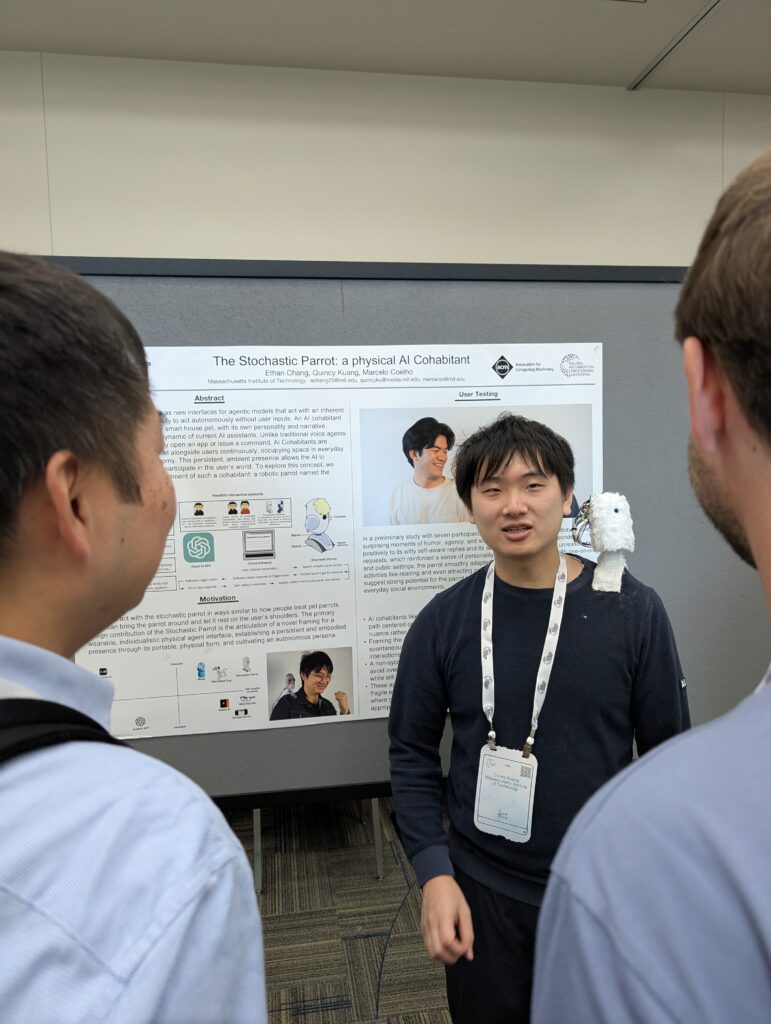
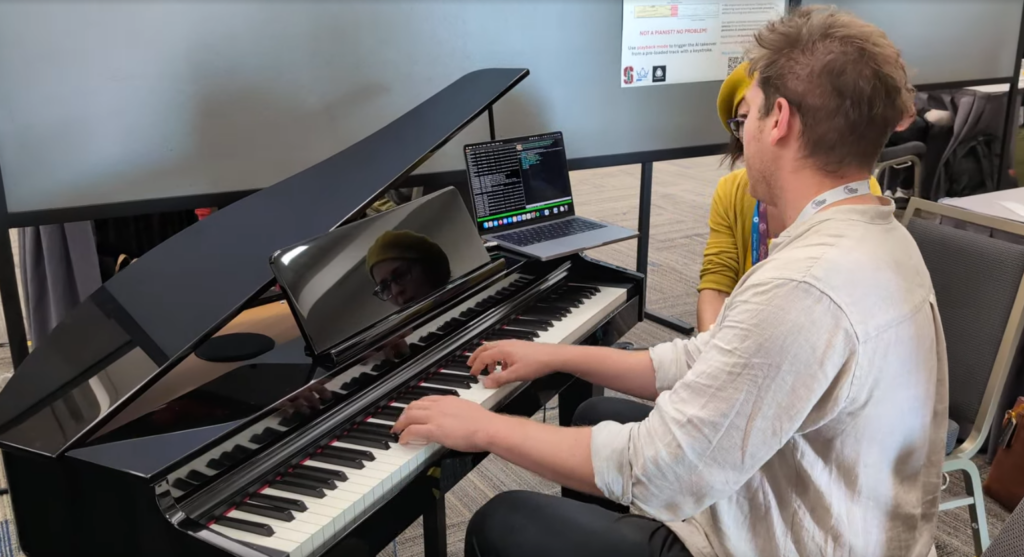
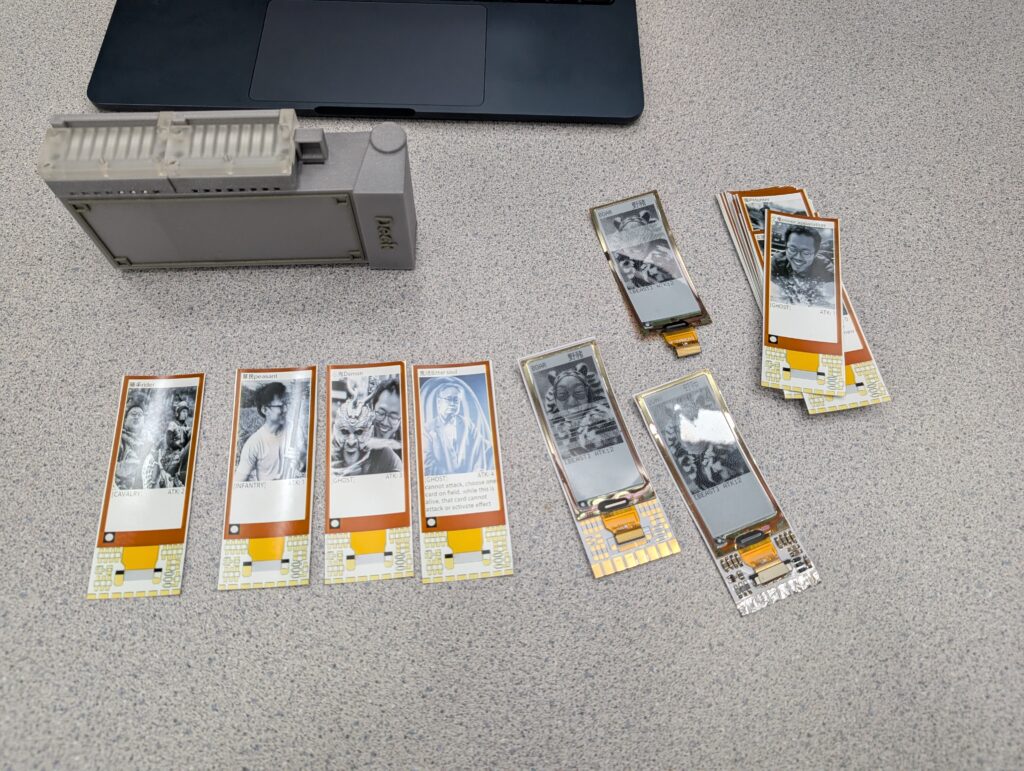
But then I discovered the Creative AI track. This was a room right at the back of the conference, where they stuffed all the oddballs. This was much closer to the indie scene I’m used to. There were some wonderfully weird projects there, turning AI into a literal stochastic parrot that sits on your shoulder, a device for turning photographs into smell scapes, or another for generating e-ink playing cards. The autocompleting piano drew the largest crowds. It was a noisy hall with all the music toys.
I had a lot of fun in this room. It contrasted a lot with going to Everything Procedural earlier this year. That is also a conference about what creatives can create with computers, stocked with game dev academics, indie developers and some big studios. But there were only 4 AI talks out of a dozen, and the general attitude was that AI should know its place as a niche tool in a much larger toolbox. At NeurIPS, rdos were throwing AI at any idea, and seeing what sticks. I liked that a lot more, but to be fair, I don’t think any of the presenters were the sorts to care about the job loss or copyright issues that were an unstated premise at Everything Procedural.
AI Safety at NeurIPS
In terms of posters in the main event, there is remarkably little. Safety goes under the “Social Applications” banner, which has quite a good showing, but specifically safety was probably half a dozen posters (0.1% of the total). Shame. Apparently few people at NeurIPS even know what AGI stands for.
That said, one of the keynote speakers was Zeynep Tufekci who gave a safety oriented talk which i thought quite good, and well pitched to the audience. It make a plausible case for why AI could break society and how the attendees should consider their careers and research wisely.
The AI Safety stuff (or really any niche AI interest) is better found at workshops and side events. This was pretty lively, I spent all of Sunday at the Mech Interp workshop. It’s hard to say what the prevailing wisdom was though. The main talks either spoke about some of the difficulties MechInterp has been having (following GDM’s recent update) or offering a counterpoint/way forward. Very interesting, but not the most uplifting vision.
SLT At NeurIPS
Singular Learning Theory is the key maths theory behind the work my new employer, Timaeus, does. They didn’t have a paper at the conference, so I was there as their semi-official representative, despite my tenuous grasp at this early stage on the company.
I was very pleasantly surprised how many people had heard of SLT and/or Timaeus and were keen to know more about it. Several of those had read the online material and concluded it was too tough for them – I hope to make a gentler introduction to it in future. But there was a lot of optimism that it might pay off, and interest in what we are developing.
SLT was mentioned twice during the MechIntper talks, specifically as one of the “ambitious interpretability” techniques to contrast GDMs “practical” agenda.
There were a lot of posters about influence functions, which Timaeus is actively researching, so I know our work is not too niche at least.
Silly at NeurIPS
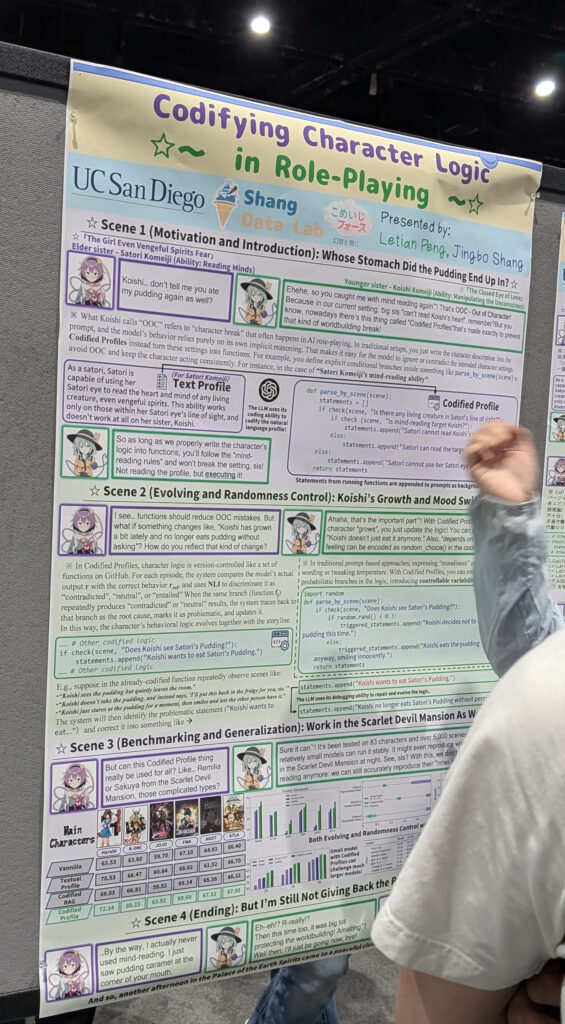
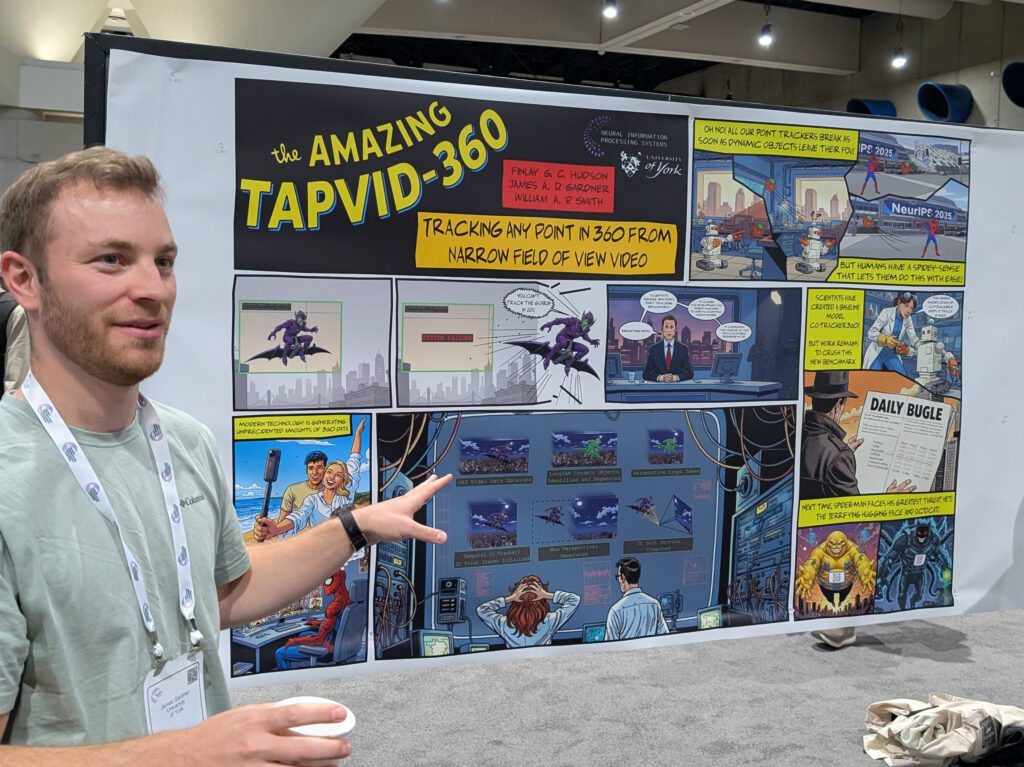
Thankfully, not everyone saw the conference as a job opportunity or time to show off. Several posters were eyecatchingly whismical, I wish I had photographed more.