I’ve released a new library, Sylves that handles the geometry of grids for C# or Unity. I’ve basically distilled all my knowledge from several different grid projects, and made a solid base for anything you might want.
Announcing Sylves
I’ve released a new library, Sylves that handles the geometry of grids for C# or Unity. I’ve basically distilled all my knowledge from several different grid projects, and made a solid base for anything you might want.
A cool technique I’ve wanted to write up for a while is “Fractal Coordinates” described in a paper by Peter Mawhorter. Don’t be scared by the name, it’s essentially a variant on quadtrees that covers the entire 2d plane. Fractal coordinates have some interesting properties that are useful for procedural generation.
But first, let’s catch up on quadtrees.
Continue reading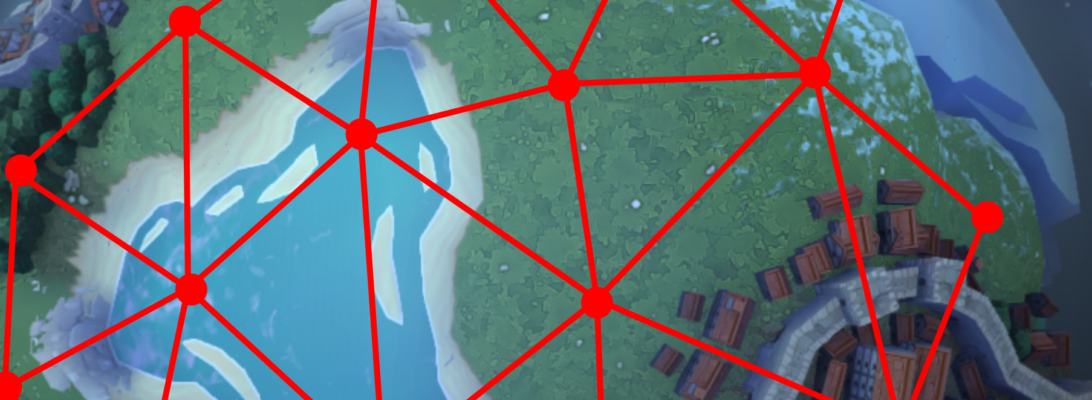
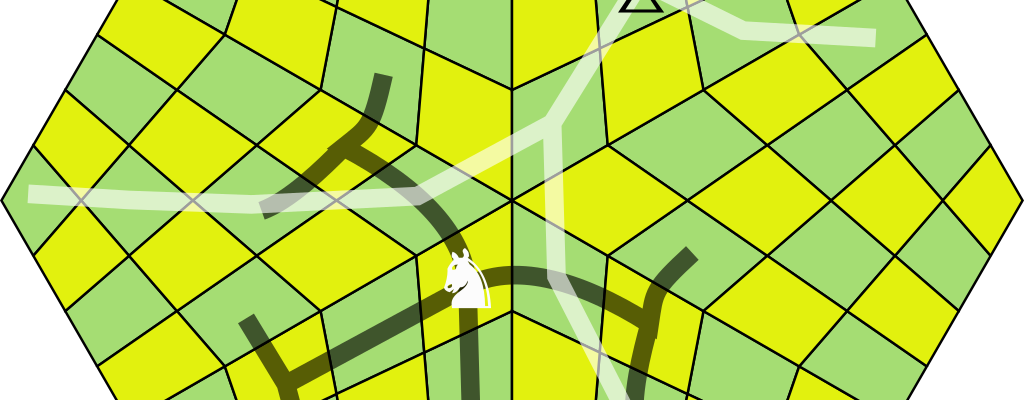
It’s been over a year since I last deconstructed how a game does its procedural generation. Today we’ll be looking at Planet, a 2016 cosy design toy by one of my favourite developers, Oskar Stålberg.
Continue reading
Suppose you wanted to code a simple chess game. One key bit of game logic is to describe what are legal moves for each piece. There’s only 6 types of piece (pawn, knight, bishop, rook, queen, king) so this isn’t exactly a hard task. You can write rules such as:
def canRookMove(from, to):
  # Ignores questions about colliding with other pieces
  return (from.x == to.x or from.y == to.y) and from is not to
But these days, I’ve been thinking a lot about grids, and the above approach just doesn’t generalize. What if you wanted to play chess on a stranger grid?
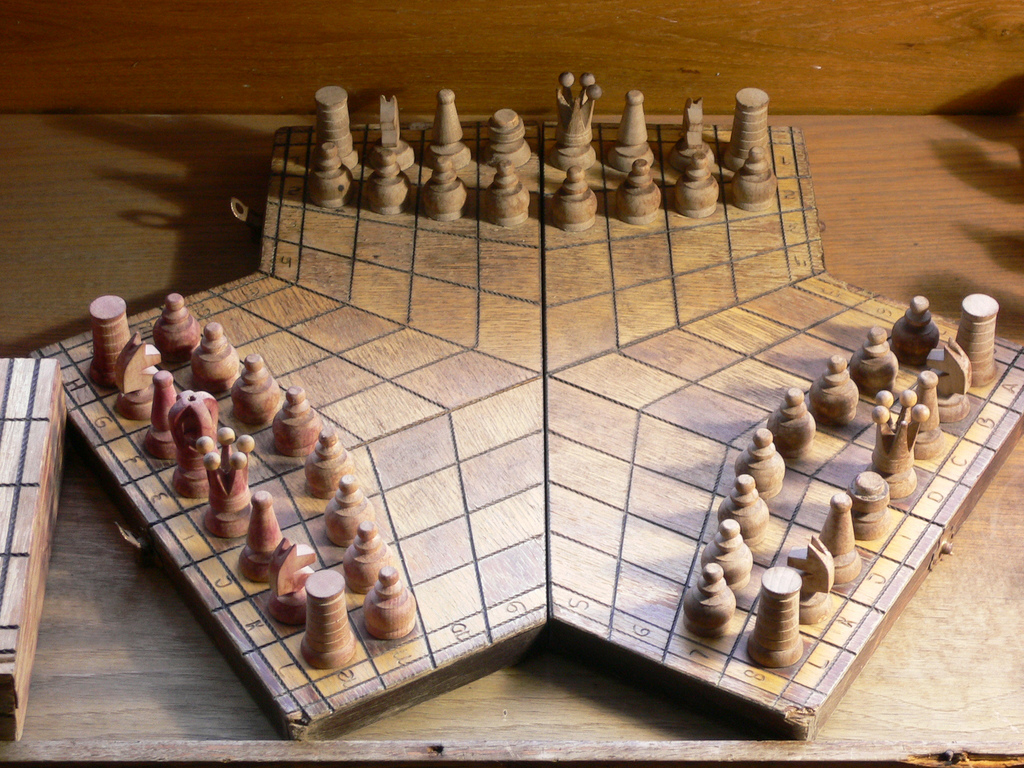
What would it mean to play chess on the grid above, or a hexagonal grid, and so on? You’d have to write a whole new set of rules, and they could get very complicated depending on the grid in question. What I want is a language that describes how pieces move, which generalizes to any board. And I think I’ve found it, using regular expressions.
Continue reading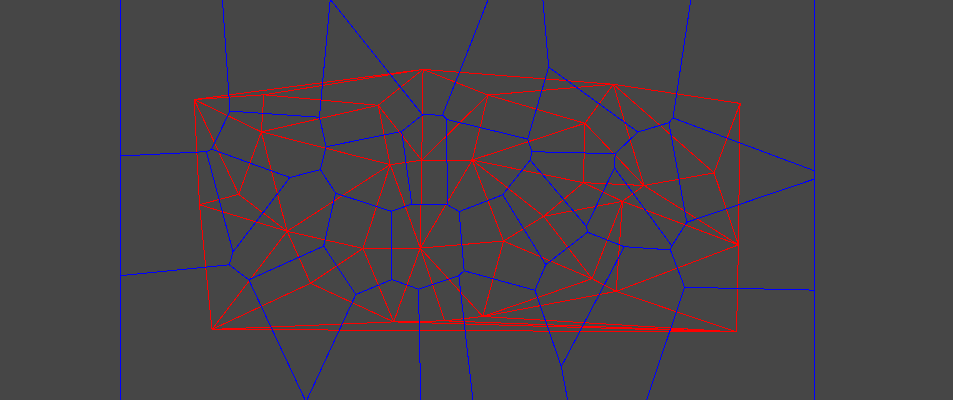
I’ve relased a new library, VoronatorSharp.
VoronatorSharp is a C# library that computes Voronoi diagrams. The Voronoi diagram for a collection of points is the polygons that enclose the areas nearest each of those sites.
Voronoi diagrams have applications in a number of areas such as computer graphics.
This library features:
n log(n) sweephull algorithm.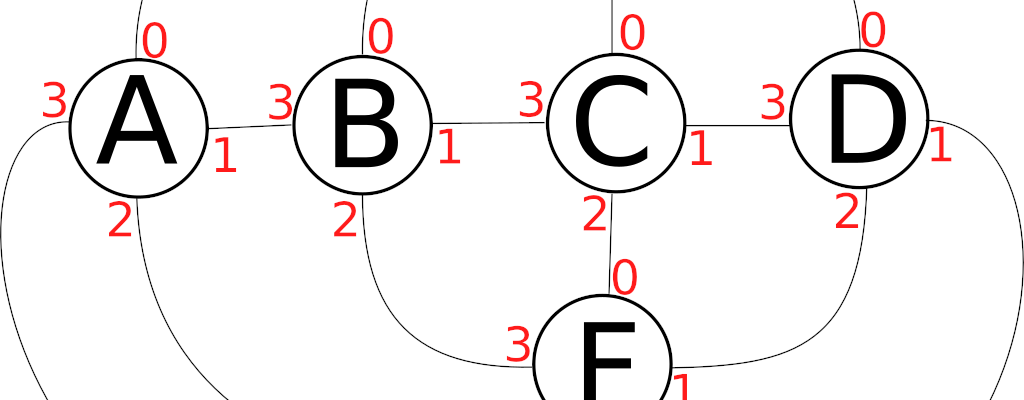
Graphs are a data structure we’ve already talked a lot. Today we’re looking at extension of them which is both obvious and common, but I think is rarely actually discussed. Normal graphs are just a collection of nodes and edges, and contain no spatial information. We’re going to introduce rotation graphs (aka rotation maps) that contain just enough information to allow a concept of turning left or right – i.e. rotation.
Continue reading
As a side-project of a side-project, I’ve made a little painting program. It’s like a normal paint program, only you paint on a tile grid instead of pixels. You can create mosaic and stained-glass style images.
Continue reading
When I spoke about autotiling, I briefly touched on how it’s possible to use Wave Function Collapse (or other constraint based generators) as a form of autotiling, i.e. user-directed editing of tilemaps.
I’ve usually referred to this technique as “editable WFC“. It’s a combination of autotiling and WFC, and contains the best of both:
This is different from most other autotilers, which either require manual configuration of patterns used to enforce good behaviour, hidden layers, or come with more stringent requirements on what tiles are available.
Continue reading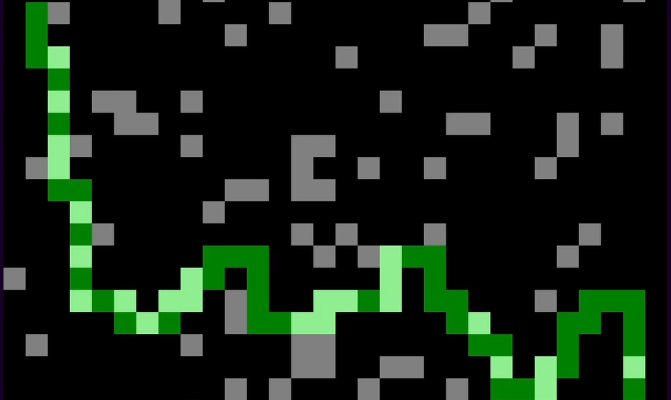
Back in 2017, I described a method of random path generation called Chiseling. It gives very nice wiggly paths, but I was never satisifed with the performance. I later revisited it, and found a faster algorithm, but it was a bit complicated to implement.
I’m pleased to say that I think I’ve finally found a way of implementing it that is both fast and simple.
Continue reading